

The Role of AI in Modern Digital Marketing Strategies
Oct 24, 2026


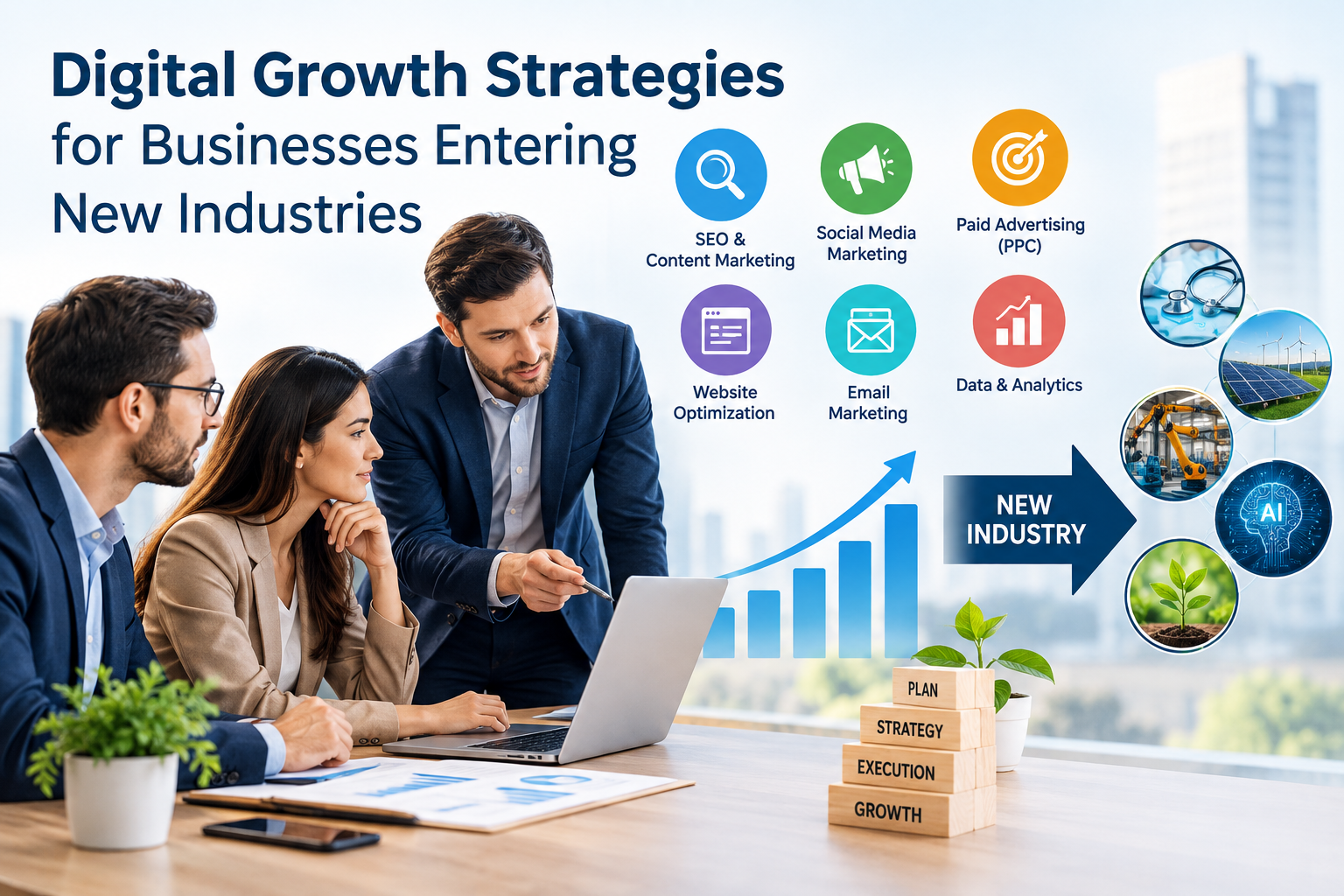
Entering a new industry creates exciting opportunities for businesses looking to expand their market reach, diversify revenue, and attract new customers. However, success requires more than launching a product or introducing a service. Companies must understand unfamiliar audiences, evaluate competitors, build credibility, and develop marketing strategies that support sustainable growth.
Businesses entering a new market often face challenges such as limited brand recognition, changing customer expectations, and established competitors with loyal audiences. A well-planned digital growth strategy helps overcome these barriers by improving visibility, communicating value, and creating meaningful customer relationships.
By combining market research, targeted marketing, and continuous performance analysis, businesses can establish a strong foundation and compete more effectively in an unfamiliar industry.
Before investing in marketing campaigns, businesses should understand the industry they intend to enter. Research helps identify customer needs, purchasing behaviors, market trends, and potential gaps that competitors may not be addressing.
Start by examining the following areas:
Customer expectations: Understand the problems customers want to solve and the benefits they expect.
Competitor positioning: Analyze competing brands, pricing models, marketing channels, and customer feedback.
Industry trends: Identify emerging technologies, changing preferences, and opportunities for differentiation.
Market demand: Evaluate whether sufficient demand exists for your products or services.
Customer surveys, industry reports, keyword research, and competitor analysis can provide useful insights. This information allows businesses to develop relevant messaging and avoid investing in campaigns that do not match market needs.
When entering a new industry, brand recognition may be limited or nonexistent. Businesses must communicate their expertise, values, and unique selling points clearly across digital channels.
A professional website is an essential starting point. It should explain what the business offers, whom it serves, and why customers should consider its solutions. Clear service descriptions, informative content, customer testimonials, and accessible contact information can help build trust.
Consistent branding also matters. Maintain a recognizable tone, visual identity, and message across the website, social media profiles, email campaigns, and advertising platforms.
Working with a Digital Marketing Agency can help businesses develop a coordinated online presence that aligns brand positioning with their new industry’s audience and competitive environment.
Search engine optimization helps businesses attract potential customers who are actively looking for relevant products, services, or information. However, entering a new industry may require a different keyword strategy than the one used in an established market.
Begin by identifying search terms related to customer problems, industry-specific services, product categories, and purchase intent. Organize these keywords into relevant website pages and supporting educational content.
For example, a company moving into the healthcare technology sector may need content addressing software capabilities, implementation processes, security considerations, and industry-specific challenges.
An effective SEO strategy should include:
A carefully planned SEO approach can build long-term visibility and reduce dependence on paid advertising alone.
Customers may hesitate to work with a business that lacks a proven reputation in their industry. Content marketing helps address this concern by demonstrating knowledge, answering questions, and explaining how a company’s solutions deliver value.
Publish informative blog posts, detailed guides, industry insights, comparison articles, and case studies where relevant. Focus on the challenges customers face rather than producing content solely to promote products or services.
Educational content can also support customers at different stages of the buying journey. Beginners may need introductory explanations, while decision-makers may look for pricing considerations, implementation guidance, and evidence of results.
A reliable Digital Marketing Agency can help create a content calendar that connects educational resources with business goals, relevant keywords, and customer search intent.
Paid advertising can help businesses gain visibility while organic marketing efforts develop. Platforms such as Google Ads and social media advertising services allow companies to reach audiences based on search intent, interests, professional characteristics, and other permitted targeting criteria.
The key is to begin with a clearly defined audience and a measurable objective. Rather than spending heavily across multiple platforms, test a small number of campaigns to determine which channels generate qualified leads or meaningful sales opportunities.
Create different advertising messages for different audience segments. Highlight the problems your product solves, explain its practical benefits, and direct users to relevant landing pages.
Monitor metrics such as cost per lead, conversion rate, customer acquisition cost, and return on advertising spend. These measurements provide a more useful picture of campaign effectiveness than clicks or impressions alone.
Trust can be a significant barrier when entering a competitive industry. Customers often prefer brands they recognize or businesses that can demonstrate successful outcomes.
Companies can strengthen credibility through authentic customer testimonials, verified reviews, relevant certifications, expert contributions, and detailed case studies. Where direct industry experience is limited, highlight transferable expertise, product quality, transparent processes, and the team’s relevant qualifications without overstating capabilities.
Social media can also help businesses participate in industry conversations, answer customer questions, and share useful insights. Professional communities, partnerships, webinars, and industry events provide additional opportunities to connect with potential customers.
Consistent engagement helps businesses understand audience concerns and build relationships beyond individual transactions.
Digital growth strategies should evolve as businesses gather information about their new market. Analytics tools can reveal which pages attract visitors, which campaigns generate inquiries, and where potential customers leave the conversion process.
Set clear key performance indicators before launching campaigns. Depending on your objectives, these may include qualified leads, sales conversion rates, organic traffic, customer acquisition costs, and repeat purchases.
Review performance regularly and identify patterns. If a landing page attracts visitors but produces few inquiries, its messaging, user experience, or call to action may need improvement. If advertising generates many leads but few sales, targeting or lead qualification may require attention.
A Digital Marketing Agency can help interpret these findings and translate them into practical improvements across SEO, paid campaigns, content marketing, and conversion optimization.
Rapid expansion can create operational pressure if marketing efforts grow faster than a business’s ability to serve customers. A phased strategy helps companies validate demand, improve their offering, and allocate resources more effectively.
Begin with a focused audience, a clearly defined value proposition, and a limited set of marketing channels. Measure early results, gather customer feedback, and refine the approach before expanding into additional segments or locations.
As demand increases, invest in scalable processes such as customer relationship management systems, email automation, lead tracking, and performance dashboards. These tools can improve efficiency while helping teams maintain consistent customer experiences.
Businesses should also review their budgets regularly to ensure marketing investments remain aligned with revenue goals and available resources.
Entering a new industry requires careful planning, a clear understanding of customer needs, and a willingness to adapt. Businesses that invest in market research, strong branding, targeted SEO, useful content, and measurable advertising can build visibility and credibility in unfamiliar markets.
Long-term success depends on more than attracting attention. Companies must demonstrate value, earn customer trust, and continuously improve their marketing strategies using reliable performance data.
If your business is preparing to enter a new industry, a strategic approach can help you identify opportunities and prioritize the right activities. Connect with a Digital Marketing Agency for tailored growth strategies to explore ways to strengthen your online presence, reach relevant audiences, and support sustainable business growth.
What is the first step when entering a new industry?
Start with market research. Analyze customer needs, competitor offerings, industry trends, and market demand before deciding how to position your business or allocate your marketing budget.
How can digital marketing help businesses enter new markets?
Digital marketing helps businesses reach relevant audiences through search engines, social media, content, email, and paid advertising. It also provides measurable insights that support better marketing decisions.
Why is SEO important when entering a new industry?
SEO helps businesses appear in relevant search results when potential customers look for related products, services, or information. It can support long-term visibility and generate organic traffic.
How long does it take to see results from digital growth strategies?
Timelines vary by industry, competition, budget, and marketing channel. Paid campaigns may produce early insights relatively quickly, while SEO and brand-building efforts generally require consistent work over a longer period.
What marketing channels should a business prioritize?
Prioritize channels based on your audience, objectives, budget, and sales cycle. SEO, content marketing, paid advertising, social media, and email can all be useful, but not every business needs to invest equally in each one.
How can businesses measure digital growth success?
Track relevant indicators such as qualified leads, conversion rates, customer acquisition costs, sales revenue, organic traffic, and customer retention. Choose metrics that directly connect marketing activity with business objectives.