

Why Is Technical SEO Important for Digital Marketing Success?
Oct 5, 2026


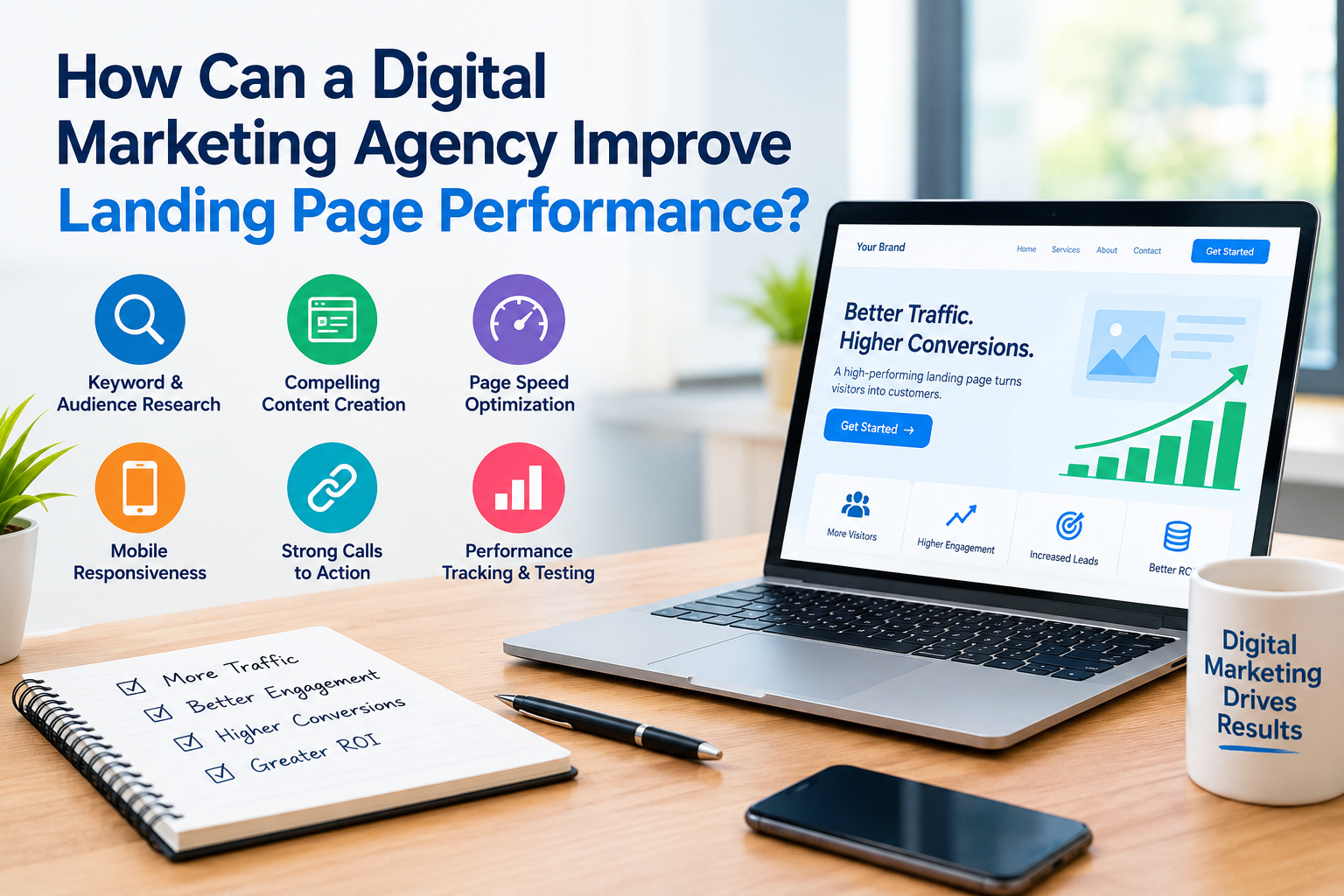
A landing page often determines whether a website visitor becomes a lead, customer, or simply leaves. Even a well-designed marketing campaign can struggle if the landing page is confusing, slow, difficult to navigate, or disconnected from the advertisement that brought visitors there. Improving landing page performance therefore requires a combination of strategy, design, user experience, content, and continuous testing.
A Digital Marketing Agency can analyze each part of a landing page to identify opportunities for improvement. From understanding visitor intent to refining calls to action, professional optimization can help businesses create landing pages that are clearer, more persuasive, and better aligned with marketing objectives.
Effective optimization begins with understanding who is visiting the page and what they expect to find. Different audiences may have different motivations, concerns, and purchasing stages.
A Digital Marketing Agency can examine audience data, search behavior, campaign information, and customer profiles to understand visitor intent. This information can influence everything from the headline and page structure to the offer and call to action.
For example, someone searching for an immediate solution may respond better to a direct offer, while someone researching a complex service may need educational information, supporting evidence, and answers to common questions before taking action.
The headline is one of the first elements visitors notice. It should quickly communicate what the page offers and why the visitor should continue reading.
A strong headline is specific, easy to understand, and relevant to the traffic source. If an advertisement promises a particular solution but the landing page presents a completely different message, visitors may lose confidence and leave.
Agencies can test different headline structures to determine which messages communicate value most effectively.
Visitors should understand the benefit of an offer without having to search through large amounts of text. A clear value proposition explains what the product or service provides and why it may be useful.
Effective landing pages focus on customer outcomes rather than simply listing features. Instead of only explaining what a service includes, the page can show how it addresses a specific problem or helps achieve a meaningful goal.
Businesses seeking a broader approach can explore data-driven digital marketing solutions for improving online visibility and conversions as part of their overall growth strategy.
The call to action, or CTA, guides visitors toward the next step. It might encourage users to request a quote, schedule a consultation, download a resource, register for an event, or make a purchase.
A Digital Marketing Agency can evaluate CTA wording, placement, design, and frequency. The CTA should be noticeable without feeling excessive, and its wording should clearly explain what happens after the visitor clicks.
For example, specific phrases such as “Request a Free Consultation” can communicate more information than a generic “Submit” button.
A landing page should have a clear purpose. Too many navigation options, competing offers, excessive graphics, or unrelated messages can distract visitors from the intended action.
A focused layout can make the decision-making process easier. Important information should be easy to scan, while supporting details can be organized into sections for visitors who want to learn more.
This does not mean every landing page needs to be extremely short. The appropriate length depends on the complexity of the offer and the amount of information customers need before taking action.
Performance is not only about visual appearance. A slow-loading page can create frustration and cause visitors to leave before the content appears.
Landing pages should also work smoothly across smartphones, tablets, laptops, and desktop computers. An agency can assess loading performance, image sizes, scripts, responsive design, forms, buttons, and other technical elements.
Mobile optimization is particularly important because many users discover businesses through mobile searches and advertising.
Visitors may hesitate to take action if they are uncertain about a company’s credibility. Landing pages can address this concern through relevant evidence.
Depending on the business, useful trust elements may include customer testimonials, reviews, case studies, certifications, guarantees, client logos, statistics, or clear explanations of the process.
A Digital Marketing Agency can help determine which trust signals are most appropriate for the target audience without overwhelming the page with unnecessary information.
Forms are often an important part of lead-generation landing pages. However, requesting too much information can discourage visitors from completing them.
Businesses should evaluate which fields are genuinely necessary. A simple form may be appropriate for an initial consultation, while more detailed information might be required for a specialized service.
Agencies can test form length, field arrangement, button wording, and supporting copy to identify potential barriers to completion.
Landing page optimization should not rely entirely on personal opinions. A/B testing allows businesses to compare different versions of page elements and evaluate how visitors respond.
Testing may involve headlines, images, CTAs, forms, layouts, offers, or supporting content. Results should be measured using relevant metrics such as conversion rate, qualified leads, cost per conversion, and revenue where appropriate.
A Digital Marketing Agency can establish a testing process that prioritizes meaningful changes and uses performance data to guide future improvements.
A landing page should work as part of a larger marketing journey. Search advertisements, social campaigns, email promotions, and other traffic sources should align with the landing-page message.
When the ad, keyword, offer, and landing page are consistent, visitors can more easily understand that they have arrived at the right destination.
Businesses that want to evaluate their landing pages, campaign alignment, and conversion opportunities can connect with digital marketing professionals for a tailored strategy.
Landing page optimization is an ongoing process. Visitor behavior can change as audiences, competitors, offers, and market conditions evolve.
Businesses should regularly monitor traffic sources, engagement, conversion rates, lead quality, and other relevant metrics. Performance data can reveal whether a page is attracting the right visitors and whether those visitors are taking the desired actions.
A Digital Marketing Agency can use these insights to identify weaknesses, test improvements, and refine landing pages over time.
What makes a landing page effective?
An effective landing page generally has a clear purpose, relevant messaging, strong value proposition, easy navigation, persuasive supporting information, a noticeable CTA, and a smooth user experience.
How can an agency improve landing page conversions?
An agency can analyze user behavior, improve page copy and design, optimize CTAs and forms, increase page speed, strengthen trust signals, and conduct A/B testing.
Why is mobile optimization important for landing pages?
Many users access websites through smartphones. A mobile-friendly landing page makes content, forms, buttons, and navigation easier to use on smaller screens.
How often should a landing page be tested?
Testing frequency depends on traffic volume, campaign goals, and the size of potential improvements. Businesses should collect enough meaningful data before making conclusions from a test.
What metrics should be monitored?
Important metrics may include conversion rate, bounce or engagement indicators, form completion rate, cost per lead, qualified leads, and revenue generated from the landing page.